Showing posts with label Financial. Show all posts

Thursday, December 30, 2010

Investment Scheme - Too good to be true


It’s puzzling when you read about people get conned using simple tricks such as magic stones etc. You always wonder this could only happen to old folk and the uneducated minorities. Well! This is no longer true when the simple tricks have developed into complicated international pyramid scheme with lots of people incuding many professionals has become part of the victim statistics.

About 10 years ago in 1999, I was introduced by a ex-colleague into the GoldQuest scheme with a joining fee of USD 300 (about RM1200 back then) in exchange of gold-flated coins. The investment or more correctly ponzi scheme promised lucrative payout for members for introducing more downline (in fact more victims) joining the scheme. Shortly after the payment, I received a welcome letter with the tracking centre no for referring more people and collecting money. The letter indicated that the company was registered in British Virgin Island and even promised the rights for refund within 12 months of purchase. However, there were no news nor any annual statement received subsequently after more than 10 years.

It was later discovered that there were many people were lured into the similar scheme worldwide in India, Sri Langka, Iran, Canada and United States and was subsequently banned in many countries. Many hoping to get rich quick have put in their hard earned money into this scheme. In the process of recovering their investments, they have also become unintentionally as part of the many “conmen” when their friends, relatives who joined subsequently were not able to recover their investments.

As for me, thankfully I have not caused any financial loss to others. As to the so-called upline who introduced me to the scheme, we are still good friend after so many years as I know he was just a victim as well.


Nevertheless, it has become one of the important lesson learned in my subsequent investment experience - Don’t jump into anything when something seems or sound too good to be true.

Friday, March 5, 2010

A Decent Return of 5.65% EPF Dividend for 2009

EPF announced today the dividend rate of 5.65% was declared for financial year ended 31 Dec 2009. It was declared on the back of the highest ever net income achieved of RM19.63 billion. The dividend rate is better than expectations for many EPF account holders and it is in fact an impressive return. I have initially anticipated to have the maximum of 5.25% - 5.5% for 2009 considering that the country had just recovered from the recession in Q4 2009, resulting from the global financial crisis. This is the second best dividend rate declared in the last 10 years, slightly behind the highest 5.8% in 2007.

Based on EPF website, as at 31 December 2009, EPF’s investment portfolio grew 8.55 per cent or RM29.25 billion to RM371.26 billion compared to RM342.01 billion in 2008.

There is an interesting note pointed out as well. For the 2009 dividend payout, the EPF requires RM3.43 billion to pay a one per cent dividend rate as a result of a larger membership base. This represents a 7.86 per cent increase over the amount of RM3.18 billion per one per cent dividend rate for 2008. This reflects the great challenge faced by the national pension organization in sustaining the decent dividend payout with the increase of contributors and the respective contributions.

In view of the challenging market condition and also unlikely to sustain the same performance of the EPF unit trust investment in 2010, I have decided to lock in some of the profit from the unit trust investment which I had commenced 6 years ago. The fund from the repruchase request is returned to the EPF account 1. Let's hope EPF can sustain the same performance for 2010 and beyond.


Monday, February 15, 2010

Economy Rankings

It is interesting to find out that Japan has successfully retained its position as the world's second largest economy, the position is maintained for more than 40 years, with the economy grew at a faster-than-expected pace of 1.1% in the last three months of 2009. The cabinet office in Tokyo reported that Gross domestic product rose at an annual 4.6 percent pace in the three months ended Dec. 31, fueled by the robust exports and a pickup in consumer demand at home. The Japanese economy was valued at about US$5.1 trillion in 2009.

On the other hand, its biggest rivalry, China ‘s GDP was valued at about US$4.91 trillion, up by a stunning growth of 8.7% in 2009. The fastest growing economy is currently at the third position of the world largest economy, behind US and Japan. However it is almost no doubt at all and almost certain that China will overtake Japan in 2010 as the world second largest economy with the GDP forecast of 9.5% in 2010, driven by the strong domestic consumption and corporate investment. The annual growth will continue to benefit from the stimulus package amounted to $586 billion to bolster its economy.

However the economy ranking serves little significance to the livelihood of the people of both the countries. Japan’s economy remains fragile and could drag growth in the months ahead as the impact of government incentives wane. Rattled by deepening deflation and falling wages, businesses remain cautious about spending and hiring. On the other hand, China’s is facing with a great challenge to maintain a balance between the economic growth needed to create sufficient jobs for the country's 1.3 billion people, and at the same time struggling not to let the economy overheat and drive up the cost of basic goods and housing for its people.

Chinese premier Wen Jiabao pointed out in his recent lunar new year speech that "All the things we do are aimed at letting people live more happily with more dignity". These are really words of wisdom from my point of view. Looking at the high unemployment rates in US and the Euro zone, what dignity can we say if the people can not even have a job to support themselves and the families?

Sunday, January 31, 2010

A Gen-Xer in Malaysia With His Retirement Plan

Mr X, a Malaysian Chinese, in his late 30s, falls into the category of Generation X, a generation born in between 1965 to 1980.

His parents are in their 60s, retired baby boomers with saving last only for 3 years of retirement. As long expected, taking care of them become his responsibilities. The baby-boomer is a generation which works the whole life to bring up their children, usually a couple of them, with little planning for their retirement in their early working lives. Their savings are usually insufficient for retirement as they have used up most of their hard earned saving for their children’s cost of livings and education. Most of them are expecting their children to look after them in their golden age, hopefully a shared responsibilities among the siblings. They believe in fixed deposit savings in bank or owning some real estates. Few of them can probably afford to retire independently, funded by their retirement savings, rental income, interest income from their deposit savings or dividend income from their stock investments.

Mr X has a lot of married colleagues and friends in the same age-group, in their mid 30s and 40s. Unlike their parent’s generation, they keep their family size small with 1-2 children the most. He even heard about the female colleague who aborted the unplanned baby so as not to jeopardize the family planning. This is a poor sandwiched generation which is caught in the rat-race situation. They have to look after their aging parents, their children and most importantly funding for their education. To maintain their lifestyle, they have no choice but to have both the couple working to earn the double incomes.

He counted at the time spent in the formal education and it was 18 years of his life (6 years of primary school, 6 years of secondary schools including an additional 1 year for Remove Class, 2 years of high school and 4 years of college). It is therefore no surprise that he entered the working life only at the age of 25, as compared to his peers in other countries with their age of early 20s when they graduated. With the official retirement age of 55, he has only a maximum of 30 years to accumulate savings for his retirement, which he expected to be another 30 years of life. It is definitely too early to retire at the age of 55 as compared to other countries which are now extending or considering to extend their official retirement age due to the higher life expectancy. Singapore is considering to raise the retirement age for its citizens to 65 from 62 by 2012 and eventually to 67 to account for the higher life expectancy of its ageing population. Spain has just announced recently the plan to raise the retirement age from 65 to 67 from 2013 onwards.

He owned his first property at his age of 30, similar to many of his colleagues and friends in the same generation. He was lucky as he bought the property at discount when the country is at the 97-98 financial crisis and the property market is at its trough. The price for the resident properties have since recovered, inflated much in the last 10 years and the prices are still on the way up without fail even in the current financial crisis. Many of the colleagues have bought their primary residence at the cost of RM500k or more. He knew that it is definitely tough for them even with their double incomes.

With the knowledge gained from his financial course, he estimated several years ago that he would require a total of RM2.5 mil at the age of 55 in order to support his retirement years at no degradation of the current lifestyle. He could not imagine at the whopping figure as he used to think a million ringgit is already a huge figure. His current net-worth is not even a quarter of the required figures even though he has used about half of his working life accumulating the savings with investments. He knew he is definitely not on the right track for a comfortable retirement. His fellow colleagues and friends are in the worse situation, struggling to maintain their decent lifestyles. He looks forward for the aim for Malaysia to become High Income Economy by 2020 as average Malaysian does not enjoy the fruits of the GDP growth for the country in their income over the years. He realized that he is about 50 by then and does not have many years left before retirement. Other than extending his retirement with a part time job, he is thinking seriously on what other options do he has now. He is really doubtful on this.

Sunday, January 24, 2010

Insurance Cash Dividend

It is very rare, but I have recently received a letter from a life insurer proposing me as the policy holder to encash all the bonus collected for a "well-deserved" holiday. Yes I am not wrong, the bonus is the accumulated cash dividend declared by the life insurer on yearly basis for one of my life policy, a 16 years old life insurance policy which I have been paying premium biannually without fail since my college days.

I called up the call centre for the life insurer to enquire on the proposal as I am little bit fishy on this. More importantly I would also like to check out the interest rates declared on the last few years of the cash dividend as I had not been receiving the statement for the bonus for the last couple of years. The call-centre agent responded hesitately that the previous interest rates declared was usually in the range of 4-5% on the account balances. The past returns were not bad, higher than the interest rates for the Banks Fixed Deposit for 12 months as the interest rate for our country is currently at its lowest. I figured out that the life insurer is trying to encourage the policy holders to encash th cash dividend so that it relieves the pressure for them to obtain a decent return similar to the EPF dividend for it's investment, with the limited investment vehicles for the life insurer.

With the lack of confidence for obtaining a higher return in these days (the equity and commodities like gold are all at their high), I have decided to leave it to the life insurer to work it out for me. A 4-5% return is good enough for me for a life policy and I would opt for premium holidays instead.

Tuesday, January 19, 2010

The Renminbi Foreign Currency Account in Malaysia

Public Bank Berhad, in collaboration with Bank of China (Malaysia), has just launched on the 18th Jan 2010 the first Renminbi Foreign Currency Account (CNY FCA) by local bank in Malaysia for both Fixed Deposit as well as Current Account.

For Fixed Deposit Account, the following is the interest rate as well as the additional interest rate for the first placement only during the promotional period, obtained this morning from the bank branch.

The minimum amount to open the foreign currency account is RM10,000 equivalent of Renminbi. (Customers can not open account or top up additional receipt using the Renminbi notes). The additional 2% mentioned in the press release is actually the promotional rates given to the existing MYR FD account holders to convert to this CNY FCA account without the fear of losing the interest rate earned in the existing MYR FD account.

In anticipation of the currency appreciation or interest rate upward revision in China in the very near future, I opened the fixed deposit account this morning. A surprise welcome mug is received. There were already a few customers like me queueing up first thing in the morning to open the first ever Renminbi Foreign Currency Account in Malaysia. I can expect the overwhelming response as lot of people have long waited for this to capitalize for the anticipated Renminbi appreciation, other local banks will probably lining up to offer the similar service very soon.


The Renminbi Current Account is also available at the same time with the interest rates of 0.4%. As there does not seem to have other additional benefits other than the marginal interest rate and the potential currency appreciation, I did not open this current account. The initial minimum deposit amount for current account is USD1,000 equivalent in CNY.

However this investment is not necessary a sure-win as it is betting on the assumption that China will appreciate their currency in this year (say in the range of 5-6% as commonly predicted) and our MYR currency does not appreciate that much or better still stays status-quo. There is concern that our currency will also appreciate at the same time (like other currencies in Asia Pacific region) when China removes the repeg and allows the renminbi to appreciate again, making this investment less favourable. There was similar "alignment" experiences in the past when our government removed the currency peg to USD on 21 July 2005, at the same day shortly after the Chinese government announced their decision to lift their currency peg to USD to a managed floating exchange rate with reference to a basket to foreign currencies.


Wednesday, January 13, 2010

Currency Movements

In responding to the global financial meltdown from 2008 onwards, countries were implementing different measures to keep their economies staying alive. Other than the multi-billions or even up to trillions of government sponsored stimulus packages to boost domestic spending and revive respective economies, many countries especially export-dependent economies have also chosen to devalue their currencies to maintain their export competitiveness or to achieve other political agendas.

In 30th Nov of last year, North Korea announced the plan to devalue the currency (North Korea won) by 100 to 1 by rolling out 10 won of notes to replace the existing notes of 1,000 North Korea Won. This measure was practically equivalent to wiping out the savings for the people of North Korea. On hearing the announcement, the people in the country rushed out to convert their local currency to the RMB or USD to protect their savings. There were also cases reported that there were people committed suicide for the fear of losing the entire savings.

Venezuela announced on the 8th Jan 2010 that the government‘s intention to implement a dual system for a fixed rate Bolivar by devaluing the currency from the 2.15 per dollar, in place since 2005, to the range of 2.6 and 4.3 per dollar. Exchange rate for essential goods such as food, medicine etc will be devalued to 2.6 per dollar, while the exchange rate for the non-essential goods (such as imported cars) and services will be devalued to the 4.3 bolivar per dollar. The currency devaluation, according to the President Hugo Chavez , is expected to boost the export while discouraging the people from buying non-essential imports. After the announcements, it was reported that Venezuelans flocked to shops to buy appliances, electronics and other import items in anticipating of the upcoming price revisions.

China, the world biggest exporter that surpassed Germany in 2009, has chosen to peg its renminbi at about 6.8 yuan to the US dollar during the recent financial crisis to boost its exports. The monetary policy has attracted many criticisms especially from the US and Europe. Paul Krugman, the Nobel prize winner in 2008, in his recent new year article, openly criticized China’s stand in devaluing the renminbi and blamed that this had created unfair advantages to China and had "stolen" 1.4 mil jobs from the US over years. The western countries are seemed to be standing together to force the fastest growing economy to appreciate its currency. This appears to lot of people as another plot from the west similar to what they have done to Japan which resulted to Plaza Accord in 1985 and the subsequent leading to the asset price bubbles and the eventual lost decade for Japan. The difference now is the victim is changed from Japan to China. All eyes are now on China on when and how much the country will appreciate its currency to ease the inflationary pressure as well as the mounting pressures from the West.

Like it or not, average people like you and me are definitely impacted by currency movements, no matter in what directions. Nobody wants their hard-earned money to be wiped out when the country devalue its currency. On the other end, we should also be alert that the country which we are dealing with is expecting to appreciate its currency as the prices of goods and services will be higher. As far as I am concerned, the renminbi appreciation would blow by travel budget for my China vacation in April. It looks to me that it is definitely make sense for me to convert to renminbi now before the appreciation.


Thursday, December 24, 2009

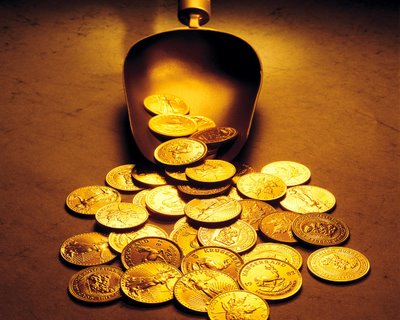
Gold Investment

Gold, the yellow metal, always has different meanings for different people. Our parents will give away gold jewelry, rings and bracelets to their daughters getting married. I recalled seeing my mother and some relatives sold their jewelry collected long time in exchange of emergency cash, at the time when credits from banks were uncommon. For a lot of people, it has become a popular investment vehicle thanks the ever increasing gold price since 2000.

Many investors view gold as the "real money" as it stores values and hedges against inflation. With the soaring budget deficits, the unprecedented injection of money supply and money printing due to various government stimulus measures worldwide in reaction to the financial crisis, there is a big fear among investors for hyper-inflation when the world economy recovers in the near future. The inflation fears and the speculations have driven the gold price to it's peak at USD 1,226 per onunce at early Dec 09. It has contracted a bit due to the profit-taking and is still at its high of USD1,105 as at 24th Dec 09.

Gold has also become part of my investment since early 2008 with the objective of hedging against inflation. The investment amount is insignificant as it constitutes only 1-2% of the asset portfolio. My prefered investment vehicle is via the gold investment account with a local bank. There are currently 2 local banks (Public Bank & MayBank) offering this investment facility with a passbook provided to keep track the buy and sell transactions. This has become popular among the retail investors due to the convenience in conducting the transactions in the bank branches and no hassle in keeping the physical gold. However the investors would have to pay for the spread for the buy and sell price which can some time be as high as 5%. It used to be in the range of 3-4% in 2008.

Tuesday, December 22, 2009

Credit Card Service Tax in 2010

Of all the announcements in the 2010 budget, the ruling of the service tax to be imposed on credit cards and charge cards effective from 2010 have attracted much public complaints, especially for those with a string of cards in their wallet.

Based on the ruling, the RM50 service tax will be imposed on the principle credit card and charge card and RM25 will be levied on the supplementary card with effective from 2010. The official reason quoted is is to encourage prudent spending among consumers. However, it can not be denied that the actual reason is to collect the additional revenue for the goverment. Based on the circulatation (as at Oct 09) of more than 11 millions of cards in the market (9.9 mil of principle cards and 1.3 mil of supplementary cards), the goverment is expected to collect the additional revenue of RM527 mil from the service tax.

Despite much complaints, the goverment officer has reiterated that the credit card service tax is here to stay. As 2010 is just around the corner, a lot of consumers have started calling up their credit card issing banks to cancel the additional credit cards or request for the bank to absorb this service tax. Based on the latest announcement, the service tax will be charged upfront for the new credit & charge cards issued. The existing cardholders will only be charged the ser­vice tax through their issuing banks upon the aniversary date of the card.

The call centre agent of one the of foreign bank informed me that they would waive my annual membership fees for my principle cards (wow!, I did not ask for it). This measure is introduced due to the increasing cancellation requests of credit cards due to the new service tax. When asked on whether the bank would absorb the service tax for their customers, the answer given is the customers could utilize 11,000 points collected to redeem for the RM50 waiver. I am sure many commercial banks will be coming out various innovative measures to minimize the card cancellations and protect their market position.

Rather than cancelling the cards, I would take up the bank's offer to keep both of my Visa and Master credit cards by utilizing the points earned for the redeemption of the service tax incurred.


Saturday, December 19, 2009

The Great Depression Ahead


I have recently read the mandarin-translated version of the book “The Great Depression Ahead - How to Prosper in the Crash Following the Greatest Boom in History” written by Harry S. Dent.

The author predicts that the world will be entering a long period of economic depression from 2010 till the beginning of the decade of 2020. The so-called “Perfect Storm” scenario will occur when the three massive bubbles (stocks, real estate, and commodities ) which have been booming for the last few decades have all reached their peak and are deflating simultaneously.

His bold economic predictions are based on the demographics and generational spending trends. His analysis is logical and supported also by the immigration trends within the regions , countries or cities. He uses basically the same theory to predict the economic booms and busts for various countries in different parts of the world which includes US, China, India, Europe etc. I could not locate any predictions for small country like Malaysia and I believe our economic is really insignificant to majority of the readers.

I must say that reading this book is an eye opener for me. It provides at least some guidance on predicting the unpredictable. I would strongly recommend reading this book in this year end holiday.